
For many people, booking a trichology consultation is a new experience. Hair and scalp concerns are often deeply personal, and it’s natural to feel uncertain about what will happen, what will be discussed, and what support may be offered. Understanding the general structure of a trichology consultation can help set realistic expectations and make the experience feel calmer and more approachable.
Trichology consultations are designed to be informational, observational, and supportive, focusing on the hair and scalp as part of overall wellbeing. While approaches may vary between practitioners, most consultations follow a broadly similar structure.
A trichology consultation typically takes place in a private, professional environment. The aim is to create a setting where individuals feel comfortable discussing their hair or scalp concerns openly, without pressure or judgement. Privacy and discretion are important, as hair changes can sometimes affect confidence and emotional wellbeing.
The consultation is usually unhurried, allowing time for discussion, observation, and questions. Unlike quick retail interactions, the emphasis is on understanding the individual rather than rushing to conclusions.
One of the most important parts of a trichology consultation is conversation. The trichologist will usually begin by asking questions about the individual’s hair and scalp history. This may include when changes were first noticed, whether they have been gradual or sudden, and whether there have been any patterns over time.
Lifestyle factors may also be discussed. These can include general hair care routines, styling practices, stress levels, diet, and environmental influences. The purpose of this discussion is not to diagnose medical conditions, but to build a fuller picture of factors that may influence hair and scalp health.
Family history may also be touched upon, as some hair changes can be hereditary. Again, this information helps provide context rather than certainty.
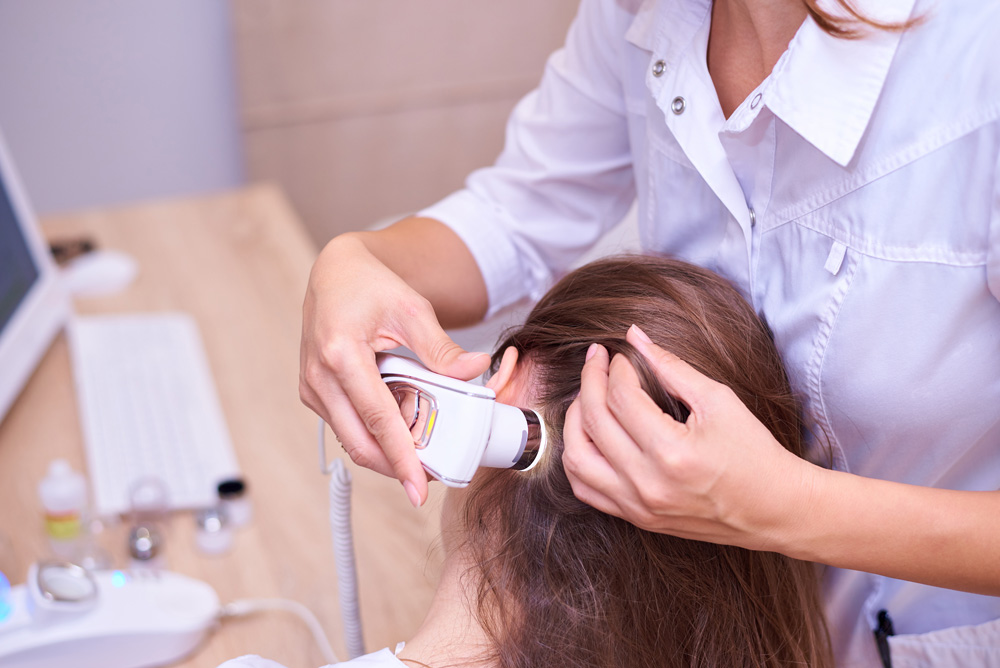
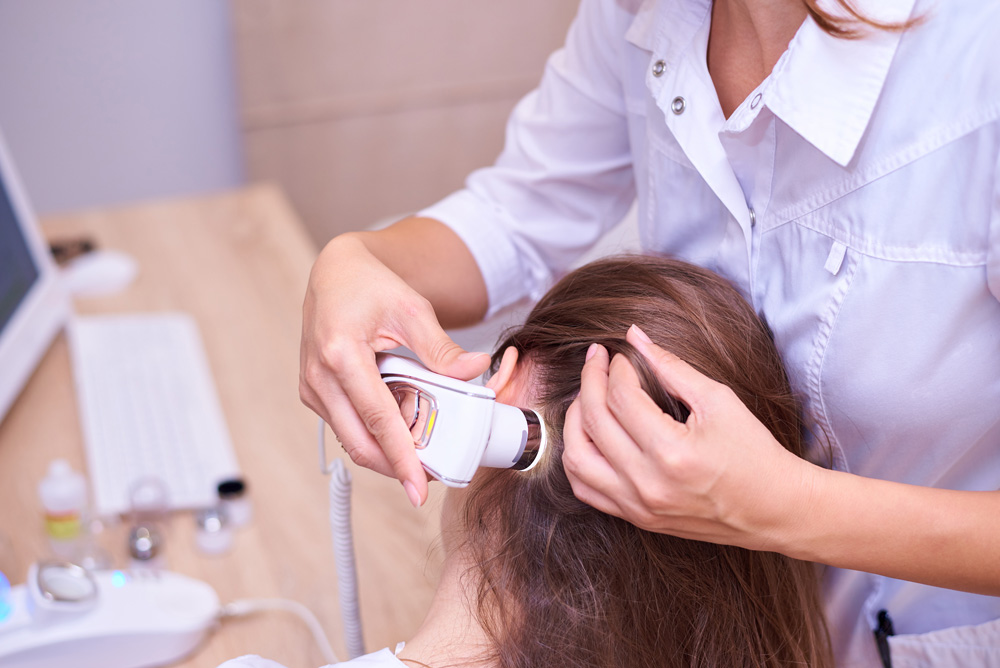
Most trichology consultations involve some form of visual assessment of the scalp and hair. This is often carried out using magnification tools or digital imaging devices.
This process allows the trichologist to observe the scalp surface, hair density, hair shafts, and general scalp condition more closely than would be possible with the naked eye alone. It is an observational tool, not a diagnostic test, and its purpose is to support discussion and education.
Clients are often shown images during the consultation, which can help them better understand their own scalp environment. This shared viewing can be reassuring, as it replaces guesswork with visible information.
A trichology consultation will usually explore current hair and scalp care practices. This may include products used, frequency of washing, styling habits, and any treatments that have been tried previously.
Rather than focusing on what someone “should” or “should not” be doing, this part of the consultation is about identifying patterns and exploring whether small adjustments may support scalp comfort or hair manageability.
Education plays a key role here. Many people are surprised to learn how everyday habits can influence scalp balance over time.
This article explains the scope and limits of professional trichology practice clearly.
One of the core roles of a trichologist is education. During a consultation, explanations are often given about hair growth cycles, scalp function, and how different external factors may interact with hair and scalp health.
This information helps individuals place their own experiences in context. Understanding that hair growth is cyclical, for example, can help explain why changes do not always happen immediately and why patience is often required when adjusting routines.
Importantly, explanations are typically framed in neutral, balanced language. The aim is to inform, not to persuade or promise outcomes.
Where appropriate, a trichologist may discuss hair or scalp care options. These are usually cosmetic or supportive in nature and may include changes to routines, product types, or professional scalp treatments that focus on comfort and care rather than medical intervention.
Any options discussed should be presented as voluntary and individual-specific. There is no obligation to proceed with any recommendation, and individuals are encouraged to ask questions and take time to consider what feels right for them.
If a concern appears to fall outside the scope of professional trichology practice, a trichologist may suggest seeking advice from another qualified healthcare professional. This reflects professional boundaries rather than limitation.
A well-structured consultation allows time for questions. Many people find reassurance simply in being heard and having the opportunity to talk through their concerns with someone knowledgeable in hair and scalp care.
The consultation is not about quick fixes. Instead, it is about understanding, reassurance, and informed decision-making.
Some consultations may be followed by written summaries or care suggestions, while others may simply conclude with verbal guidance. Follow-up appointments may be offered, but these are optional and based on individual preference.
For further insight into Ben’s professional background and approach to hair and scalp consultations, continue reading within the blog, including A Calm, Structured Approach to Hair and Scalp Concerns.
Gentle disclaimer:
This article is intended for general information and educational purposes only. Trichology consultations do not provide medical diagnosis or treatment. Individual experiences may vary. Anyone with persistent, painful, or concerning symptoms should seek advice from an appropriately qualified medical professional.
Suggested reading:
You may also find these related articles helpful for broader context and understanding:
• Questions to Ask Any Hair or Scalp Practitioner
• Who Does What in Hair and Scalp Care?